You’re in the middle of mixing up a batch of cupcakes or a layer cake for a birthday, and the recipe calls for cake flour. You check the pantry—nothing. Before you toss your mixing bowl aside or run out to the store, here’s the good news: you can make cake flour at home with just two ingredients you almost certainly already have.
What Exactly Is Cake Flour?
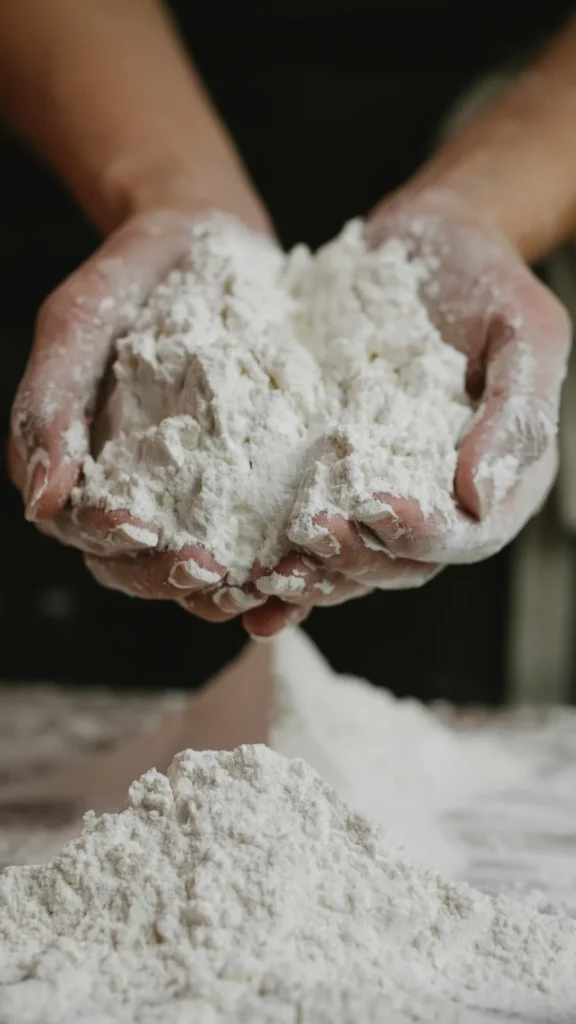
Cake flour is a finely milled flour made from soft wheat with a low protein content—about 7% to 9%—compared to all-purpose flour, which has 10% to 13% protein. That protein difference matters because protein creates gluten when mixed with liquid. Less protein means less gluten, which translates to a tender, delicate crumb and that light, airy texture you expect from angel food cake, chiffon cake, and fluffy layer cakes.
The catch? Cake flour costs more than all-purpose flour—often $4–$5 for a five-pound bag compared to $2–$3 for all-purpose. And most home bakers don’t use it often enough to justify keeping a separate bag in the pantry.
How to Make Cake Flour: The Recipe
Yields: 1 cup cake flour substitute
Time: 2 minutes
Ingredients
| Ingredient | Amount |
|---|---|
| All-purpose flour | 1 cup (minus 2 tablespoons) |
| Cornstarch | 2 tablespoons |
Equipment
- Measuring cup
- Measuring spoons
- Fine-mesh sieve or flour sifter
- Mixing bowl
Step-by-Step Instructions
Step 1: Measure the flour. Spoon all-purpose flour into a measuring cup and level it off with the back of a knife. Don’t scoop directly from the bag—that compacts the flour and throws off your measurement.
Step 2: Remove 2 tablespoons. Take 2 tablespoons of flour out of the cup and return them to your flour container. You won’t need them for this recipe.
Step 3: Add cornstarch. Add 2 tablespoons of cornstarch to the remaining flour. Cornstarch has zero protein, so it effectively lowers the overall protein percentage of the mixture to match commercial cake flour.
Step 4: Sift, sift, sift. Sift the flour and cornstarch together through a fine-mesh sieve at least 4–5 times. This isn’t optional—sifting evenly distributes the cornstarch, removes lumps, and aerates the mixture so it mimics the fine texture of real cake flour.
Step 5: Use immediately or store. Your homemade cake flour is ready to use in any recipe that calls for cake flour.
Scaling the Recipe
Need more than one cup? Scale proportionally:
| Cake Flour Needed | All-Purpose Flour | Cornstarch |
|---|---|---|
| 1 cup | 1 cup (minus 2 Tbsp) | 2 Tbsp |
| 2 cups | 2 cups (minus 4 Tbsp) | 4 Tbsp |
| 3 cups | 3 cups (minus 6 Tbsp) | 6 Tbsp |
For example, if your recipe calls for 2 cups of cake flour, measure out 2 cups of all-purpose flour, remove 4 tablespoons, and add 4 tablespoons of cornstarch.
Storage Tips
Store your homemade cake flour in an airtight container in a cool, dry place. It will stay fresh for about 2 months, though you can check the expiration dates on your all-purpose flour and cornstarch for guidance—typically 6 to 8 months.
Pro tip: Make a larger batch ahead of time and keep it labeled in your pantry. Try mixing 2 cups of all-purpose flour with 4 tablespoons of cornstarch to have 2 cups of cake flour ready when you need it.
When to Use Cake Flour (and When to Skip It)
Use cake flour for:
Skip cake flour and use all-purpose for:
- Rich chocolate cakes (cocoa powder naturally softens the texture)
- Dense butter cakes
- Banana bread or carrot cake (these need the extra structure)
- Pound cake (you want a denser crumb)
Frequently Asked Questions
Can I use something other than cornstarch?
Yes! Arrowroot powder works as a 1:1 substitute for cornstarch in this recipe. Tapioca starch and potato starch are also options. Note that arrowroot may make cakes cook faster and turn out more moist.
Do I really have to sift it that many times?
Yes. Sifting 4–5 times ensures the cornstarch is evenly distributed and incorporates air into the mixture, giving you a texture much closer to commercial cake flour. Skipping this step can leave pockets of cornstarch in your batter.
Can I use this in any recipe that calls for cake flour?
Absolutely. Just substitute 1 cup of this homemade blend for every 1 cup of cake flour called for in the recipe.
Is homemade cake flour exactly the same as store-bought?
It’s very close, but not identical. Commercial cake flour is made from soft wheat and is ground extra fine. Your homemade version mimics this through sifting and the addition of cornstarch, but the texture won’t be quite as fine. For most home baking, the difference is negligible.
Why does this work?
Cornstarch has no protein, so replacing 2 tablespoons of all-purpose flour (which has protein) with cornstarch lowers the overall protein content of the mixture. Less protein = less gluten = a softer, more tender cake.
Final Thoughts
Making your own cake flour is one of those kitchen tricks that saves you time, money, and a trip to the store. With just all-purpose flour and cornstarch—and two minutes of your time—you can have cake flour ready whenever a recipe calls for it. Keep a batch in your pantry, and you’ll never be caught off guard again.
Now go bake that cake! 🎂